Are things the same now as they were in 2010?
Every now and then some people claim to us that the failure of the cityhood vote in 2010 meant that any future vote would surely fail as well. Typically, they offer no data to substantiate that claim. The only basis for such an assertion would be that things hereabouts are exactly the same now as they were back then. We wonder how that could be, because since 2010:
- Some 2010 voters have moved or passed away.
- Residents who were 2 - 17 years old in 2010 and who still live here have become eligible voters.
- New people have moved into the area - no surprise there because more than half of the community's residents are renters AND many houses are occupied by owners who did not live here in 2010.
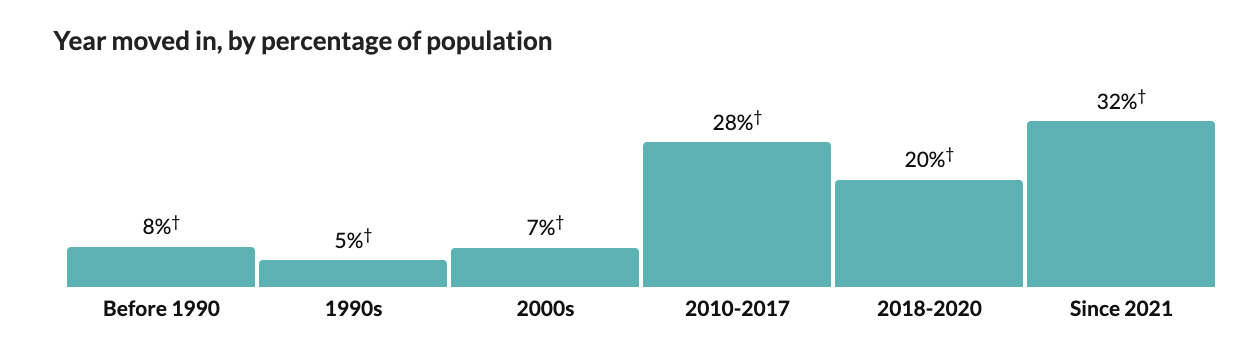
The U.S. Census Bureau routinely publishes statistics about a community's demographics, economy, housing and so forth. Arden Arcade's most recent summary was issued as estimates for 2023 based on data from the 2020 census. The chart below shows that 80% of the population moved into their residences since 2010. The Census Bureau cautions that the figure has a 10% margin of error, which means the range could be anywhere between 88% to 72%. And, obviously, not all residents are voters and some people just moved within Arden Arcade. Still, that's a remarkable shift - only a small percentage of people who voted on cityhood in 2010 are still here as voters today.
Further, the Census Bureau says 12.5% of our residents moved since a year before. That's a fairly high rate of geographic mobility: about 10% higher than the regional average and about 20% higher than the statewide average.
When you consider that there is no specific petition to LAFCO for cityhood right now and you add the time it takes to get a cityhood measure to the ballot, it is pretty clear that hardly anyone who voted on cityhood for Arden Arcade in 2010 will be around to vote on a similar measure if it reaches the ballot in 2030 or beyond. The overwhelming majority of voters in 2030 or later years will have not been here to experience the 2010 cityhood vote. If you then factor in 20 plus years of infrastructure aging and land use changes (the evolution of local malls, for example), it strains credibility to buy into the notions that nothing has changed here since 2010 and that the exact same result on the cityhood question would result going forward..